
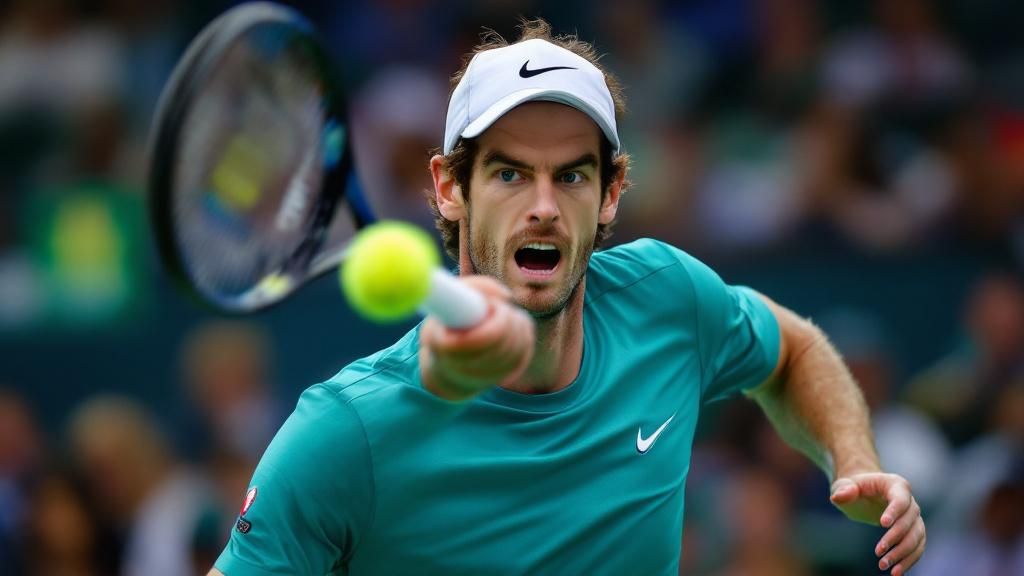
Andy Murray’s meticulously planned comeback to professional tennis has disrupted the British athletics hierarchy, suggesting a likely revival for the nation’s most accomplished player. Following his major surgical procedure, Murray’s measured reintroduction to competitive play promises to transform the state of British tennis, motivating a new generation whilst rekindling hopes of additional major championship victories. This article investigates how his disciplined method to competitive play is shaping developmental programmes, mentoring emerging talent, and repositioning Britain as a formidable force in global tennis.
The Returning Champion
Andy Murray’s re-entry into professional sport represents far more than a singular success; it embodies grit and resolve that resonates throughout British sport. After enduring a career-threatening hip operation, many wondered whether the three-time major winner would ever compete at the highest level again. His choice to attempt a return, however, showcases resolute devotion to his game and an unconquerable determination that has characterised his competitive life. The athletics fraternity follows with authentic fascination as Murray confronts this critical juncture, proving that age and injury need not determine an athlete’s trajectory or sporting aspirations.
The ramifications of Murray’s strategic return reach much further than his individual performance on court. His involvement with professional tournaments energises British tennis, delivering a concrete demonstration of resilience to younger players dealing with their own difficulties. Moreover, his return story offers essential insights in mental fortitude and physical rehabilitation, establishing new standards for athletic longevity. As Murray competes once more, he at the same time coaches the next generation, forging a bridge between recognised achievement and rising prospects that bolsters the entire British tennis ecosystem.
Effect on Tennis Development in Britain
Murray’s return to professional competition has sparked significant momentum within UK tennis development. His presence at premier competitions enhances the tennis profile across Britain, generating greater funding in young player training schemes and coaching centres. The knock-on benefits reach past elite circles, motivating community involvement and pushing sports authorities to emphasise talent identification and development routes for emerging British players.
Mentoring and Support
Beyond his courtside performances, Murray has assumed an growing significant mentoring role within the UK tennis sector. His willingness to share expertise acquired through performing at the elite standard provides invaluable guidance to younger players navigating their own career trajectories. This informal coaching influence enhances formal structures, delivering practical insights into competition readiness, psychological strength, and handling professional expectations.
Murray’s accessibility to up-and-coming athletes represents a departure from conventional power structures in professional athletics. By engaging directly with promising young players, he exhibits a commitment towards the collective progress of British tennis. His coaching role goes beyond technical instruction, encompassing career planning, sponsorship deals, and psychological techniques vital to sustaining long-term competitive success in international competition.
- Provides expert advice on event choice and scheduling
- Shares mental resilience techniques developed throughout professional journey
- Facilitates introductions to coaching and advisory networks
- Demonstrates professional standards through reliable dedication
- Encourages equilibrium between drive and individual health
Performance Comparison and Rankings
Murray’s re-entry into competitive tennis has shown impressive durability, with his results data revealing a athlete seeking to recapture his position amongst tennis’s elite. Despite the inevitable physical demands of professional competition, his positional progression has gradually climbed, reflecting both his tactical expertise and emotional strength. His wins over proven rivals have reignited discussions about his ability to compete for championship victories, whilst simultaneously providing valuable data on his recovery progress and tournament fitness.
The strategic approach of Murray’s tournament selection has been crucial in managing his recuperation whilst preserving competitive edge. By carefully balancing elite-level events with sufficient rest intervals, he has enhanced his competitive progression without undermining lasting viability. His achievements have energised British tennis enthusiasts and analysts alike, proving that prior injuries and advancing years need not diminish a competitor’s drive or achievements at the top levels of professional sport.
Future Prospects and Legacy
Andy Murray’s strategic return to professional competition has significantly transformed understandings of what constitutes a accomplished tennis trajectory. His careful strategy shows that longevity and purposeful competition can coexist bodily constraints, delivering valuable lessons to emerging competitors worldwide. The wider consequences of his comeback transcend personal achievement; Murray’s involvement in professional tennis energises UK tennis development, drawing financial support and public interest formerly channelled in different directions. His effect on the next generation illustrates how experience and resilience go beyond standard career patterns, establishing fresh standards for athletic perseverance.
Looking forward, Murray’s legacy will undoubtedly encompass more than tournament victories and ranking positions. His focus on nurturing up-and-coming British competitors has built a enduring framework for the next generation of competitors aiming for international success. By combining competitive drive with coaching duties, Murray has positioned himself as both active participant and guardian of British tennis’s future. This dual role bolsters the nation’s sporting framework whilst ensuring his deep experience benefits the sport long after his final playing career, cementing his status as transformative figure within British sporting history.
