
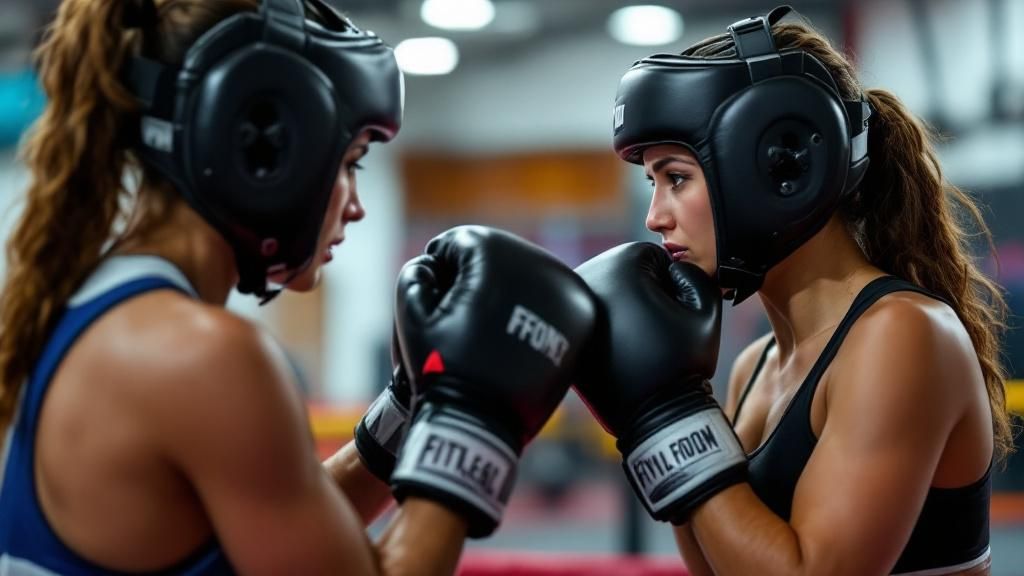
Women’s boxing has experienced a remarkable surge in interest across the UK, with participation rates rising consistently over recent years. This expansion has prompted training centres nationwide to develop their specialist fighting offerings, acknowledging the need for high-standard facilities designed for female boxers. From boutique boxing studios to traditional fitness centres, the infrastructure supporting women’s combat sports has reached unprecedented strength. This article examines the key factors behind this shift and investigates how enhanced amenities are reshaping the landscape of women’s boxing in Britain.
The Rising Tide of Women Boxers
The increase in female boxing involvement reflects a major cultural change within the fitness industry. Over the last five years, membership figures have grown exponentially, with women now making up an increasingly substantial share of boxing gym memberships across the country. This shift in demographics shows changing attitudes towards fighting sports and female athleticism, combined with increased recognition of boxing’s exceptional fitness and conditioning advantages. Gyms have responded enthusiastically to this demand, acknowledging that female boxers represent both a committed and growing market segment.
Beyond simple statistics, this wave reflects underlying societal shifts regarding women’s engagement with traditionally male-dominated sports. Female boxers today enjoy enhanced profile through broadcast coverage, competitive opportunities, and exemplary athletes performing at the highest level. Community initiatives and local training initiatives have increasingly widened participation in boxing coaching, inspiring women from varied communities to explore the sport. The combination of better training venues, welcoming spaces, and growing social recognition has generated an unprecedented opportunity for women to commit to boxing competitively, whether for physical conditioning, competitive sport, or individual growth.
Fitness Centre Infrastructure Growth Throughout the UK
The development of combat sports spaces across the UK has been truly remarkable. Large city centres like London, Manchester, and Birmingham have experienced considerable spending in purpose-built training facilities, with gyms equipping professional-grade equipment purpose-built for boxing training. These spaces now feature multiple heavy bags, speed balls, and contemporary boxing rings. Gym operators have identified that women participants demand specialised environments where they are able to train in comfort and safety, prompting the creation of female-only classes and women-centred coaching schemes that address diverse experience levels and expertise.
Beyond the principal cities, regional gyms have similarly adopted this expansion trend, refurbishing their spaces to accommodate increasing numbers of female participants. Neighbourhood facilities and standalone boxing venues have allocated considerable funds in upgrading their infrastructure, recognising that quality facilities have a strong connection with participant retention and satisfaction. Several facilities now engage female coaches and trainers who provide considerable knowledge and connection to the sport. This broad-based commitment demonstrates the authentic dedication from gym owners to advance women’s boxing, guaranteeing that aspiring boxers nationwide have entry to elite training facilities irrespective of their geographical location.
Overcoming Barriers and Changing Perceptions
The development of boxing facilities for women has significantly changed societal attitudes towards women’s involvement in fighting sports. Once regarded as a predominantly male pursuit, boxing is now increasingly recognised as an inclusive sport embracing competitors of every gender. Improved training facilities has established women’s presence in gyms and boxing rings, questioning outdated stereotypes. This cultural shift demonstrates broader changes in how communities regard female strength and athletic prowess, motivating more women to engage in boxing without fear of judgment or discrimination.
Specialist women’s boxing programmes have demonstrated crucial in fostering confidence among newcomers to the sport. Specialised coaching adapted training schedules, and welcoming community environments establish inclusive spaces where women are empowered to enhance their skills. Many gyms now offer women-only classes and women-focused coaching staff, confronting traditional barriers that formerly deterred participation. These forward-thinking programmes demonstrate that eliminating barriers and offering proper facilities directly converts into increased engagement, fundamentally transforming perceptions of women’s boxing within mainstream fitness culture.
The Next Chapter of Women’s Boxing in Britain
The evolution of female boxing in Britain appears highly promising, with industry experts forecasting sustained development over the next few years. As more gyms commit resources to modern training infrastructure and specialised coaching programmes, opportunities for up-and-coming female athletes will unquestionably enhance. This facility expansion, alongside increased media coverage and sponsorship opportunities, positions women’s boxing as a genuinely mainstream sport. The impetus presently fuelling involvement suggests that boxing will become an progressively central part of Britain’s sporting landscape.
Looking ahead, the priority must remain on nurturing talent at community level whilst creating welcoming spaces that welcome boxers of varying abilities. Continued collaboration between gyms, governing bodies, and local organisations will be vital in sustaining this growth. Furthermore, investment in coach development and athlete progression programmes will ensure the sport benefits from professional standards. As women’s boxing maintains its growth, Britain is well-placed to become a major player in nurturing the next generation of elite female boxers on national and international platforms.
